
Gurung Cuisine: Flavors of Culinary Heritage
The Gurung Kitchen
The Gurung people have a distinctive and deeply rooted culinary tradition, shaped by the mountainous environment and preserved through generations. Their food is simple yet wholesome, often made with organic, locally sourced, and homegrown ingredients. While modern influences and globalization have introduced new practices, the heart of Gurung cuisine remains tied to traditional methods and flavors that continue to define their daily lives and celebrations.
Food in Gurung households is closely linked to geography, agriculture, seasonal availability, and cultural customs. Despite regional differences, Gurung food habits and cooking techniques remain remarkably consistent, showcasing a balance of nutrition, sustainability, and taste.
Dal Bhat (Lentils and Rice)
Dal Bhat is the cornerstone of Nepali cuisine and a staple in Gurung households. It consists of steamed rice (bhat) served with lentil soup (dal), accompanied by vegetable curries, leafy greens, pickles, and meat dishes depending on one's preference.
Traditionally, rice in Gurung villages is cooked in clay pots over wood-fired stoves, giving it a distinct flavor. A touch of clarified butter (ghyu) is often added to enhance both taste and nutrition. Dal Bhat is not only a daily meal but also a cultural expression of hospitality and nourishment.
[Gurung: कैं टा, Nepali: दाल भात]

Simply Authentic: Our Signature Dal Bhat Thali
Paigo / Dhindo (Flour Porridge)
Known as 'Paigo' in Gurung and 'Dhindo' in Nepali, this dish holds special importance in the hills and mountains, where it serves as a hearty source of energy for physically demanding work.
Paigo is made by gradually mixing flours, such as millet (kodo), buckwheat (fapar), or corn (makai), into boiling water while stirring constantly with a wooden spatula to form a smooth, thick porridge. It is typically eaten warm, paired with lentil soup, veg or non-veg curries, gundruk soup, yoghurt sauce, or a small bowl of clarified butter. Traditionally, small portions are swallowed without chewing, a unique eating style that reflects Gurung culinary customs.
[Gurung: पयगो, Nepali: ढिंडो]

A Taste of Tradition: Millet Dhindo & Accompaniments
Sukuti (Smoked Meat Jerky)
Sukuti, a beloved delicacy, is prepared by cutting boneless meat into strips, optionally seasoning them with spices, and drying them over a wood fire. This method not only preserves the meat for months but also gives it a smoky, savory flavor.
Buffalo meat is most common, though goat, lamb, or chicken may also be used. When ready to eat, sukuti is softened in water and cooked with spices to create a flavorful dish. This age-old preservation technique has long helped Gurung families endure food shortages during harsh winters or other natural calamities.
[Gurung: शे कारा, Nepali: सुकुटी]
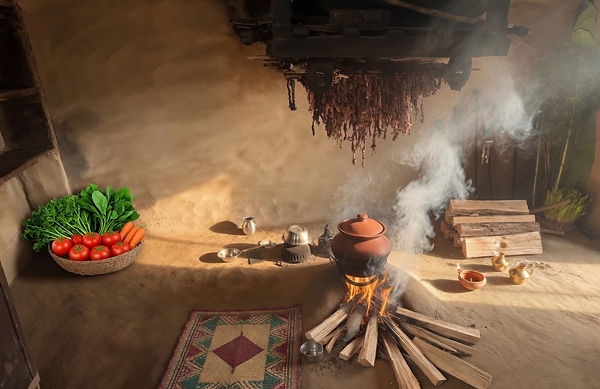
A traditional rural mud stove with buffalo sukuti hung above for smoke-drying.

Sukuti strips: A staple of our culture, dried to perfection and full of flavor.

Tradition on a plate: Smoked, spiced, and served with fresh seasonal greens.
Sel Roti (Ring-Shaped Rice Bread)
Sel Roti is a festive delicacy enjoyed by Gurungs and other Nepali communities during special occasions such as weddings, festivals, and family gatherings. Made from coarse rice flour, milk, water, sugar, semolina (सुजी), and clarified butter, the batter is poured in a ring into the hot cooking oil, creating a crisp, golden-brown crust with a soft interior. Many recipes also include cardamom powder, cinnamon powder, baking powder, and locally sourced herbs for added flavor and a silkier batter.
Though especially popular during the Hindu festivals of Dashain and Tihar, Sel Roti also holds deep cultural significance in Gurung households, where it symbolizes sharing, hospitality, and joy.
[Gurung: म्ल्हशीं क्हें, Nepali: सेल रोटी]

Golden, crispy, and perfectly ring-shaped.
Nothing beats a fresh batch of Sel Roti!
Gundruk (Fermented Leafy Greens)
Gundruk is one of Nepal’s most iconic fermented foods and is a staple side dish in Gurung cuisine. Made from mustard, radish, or cauliflower leaves, the greens are wilted, packed tightly in containers, fermented for about a week, and then sun-dried.
The result is a tangy, preserved leafy vegetable that can be stored for months. Gundruk is often cooked into soups or served as a side dish with Dal Bhat or Paigo, providing both flavor and essential nutrients.
[Gurung: गुन्द्रुक, Nepali: गुन्द्रुक]
Jaand (Fermented Grain Beverage)
Jaand is a traditional homemade, low-alcohol, non-distilled beverage brewed from fermented rice, millet, or barley. A special starter culture called 'marcha' is mixed with cooked grains and stored in tightly sealed wooden containers for at least a week, allowing the grains to ferment properly. Once ready, the fermented grains can be consumed in multiple ways, depending on preference. They can be eaten as is, mixed with water to make a thick drink, or pan-fried in a small amount of clarified butter for deeper flavor.
Jaand holds a special place in Gurung social life and is often served at gatherings, festivals, and rituals. Its low alcohol content makes it suitable for long communal celebrations, symbolizing togetherness and hospitality.
[Gurung: पा के, sf]oaf, Nepali: जांड]
Paa / Raksi (Distilled Spirit)
Raksi, or 'Paa' in the Gurung language, is a stronger distilled spirit traditionally made from fermented millet or rice. Using a traditional pot still, alcohol vapors are condensed into a clear, potent drink. Raksi is deeply woven into Gurung rituals, ceremonies, and hospitality. It is often served alongside savory snacks and remains an integral part of cultural and religious practices.
[Gurung: पा, Nepali: रक्सी]
Gurung cuisine extends far beyond the dishes mentioned, with many more varieties enjoyed by the community. It reflects a deep harmony with nature, a reliance on locally available ingredients, and a commitment to preserving time-honored culinary traditions. From everyday staples like Dal Bhat and Paigo, to festive delights such as Sel Roti, and from preserved foods like Sukuti and Gundruk, to traditional drinks like Jaand and Raksi, Gurung food is not only about nourishment but also about identity, heritage, and shared cultural pride. Across the world, Nepalese Gurung diasporas continue to preserve and pass down this culinary heritage to younger generations, even in foreign lands. Organizations like Tamu Pariwar New York, Inc. play a vital role in this effort, showcasing Gurung food at every occasion, whether through indoor Lhosar celebrations or outdoor camping adventures, ensuring that these cherished culinary practices remain alive for generations to come.